
AI models built
for your brand.
Any age, any ethnicity, any vibe. Build a custom AI model unique to your label and hold the same face across stills, lookbooks, motion video, UGC, and on-product compositing.
Eight archetypes ready out of the box. From $9/mo.
3 models on Hobby · 10 on Pro · 25 on Studio · unlimited on Agency · 7-day trial
Design your actor library.
Any age, any look, any vibe. Build a custom AI actor once — the same face, body, and brand voice hold across every campaign, every SKU, every channel. Pair them with a brand kit and you have a permanent cast.
Eight examples. Unlimited possibilities.
Describe the actor you need — age, ethnicity, hair, build, vibe, signature accessories — and Playcut builds them once. From there, they hold their face across every still, every motion clip, every UGC ad, every product comp. The library scales with your brand.
- 100% character consistency across stills + motion
- Voice + outfit + brand-kit variants per actor
- Unlimited actors on Agency · 25 on Studio · 10 on Pro · 3 on Hobby
- Commercial use included — you own every output
Hobby $9 · Pro $29 · Studio $79 · Agency $149/seat · 7-day trial
One custom actor. Six products.
Perfect every shot.
The same face, body, and brand voice across every SKU you sell. This is the part that breaks every other AI photoshoot tool — and the reason we built Playcut.
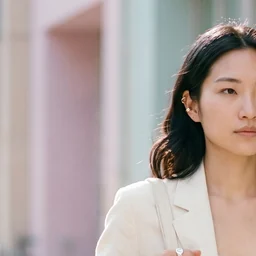
Your custom AI actor. Wearing your product.
In stills and motion.
Lookbook stills, lifestyle reels, demo videos — all from the same actor you built. Character consistency you can build a brand on.
- Build custom AI actors — unique to your brand, not stock
- 100% character consistency across every SKU and shot
- Same actor in stills AND motion — character holds up across formats
- On-product compositing — actor holds, wears, uses your real product
- Brand-kit aware — colors, lighting, palette stay consistent
- Studio photographer filters — editorial light, golden hour, lookbook
- Commercial use included — no model-release fees, no 1099s, you own it
Like having a photographer on set.
Pre-built shoot styles tuned by working photographers — lighting, lens, mood, framing. Apply any filter to any actor in your library. Same Mira, eight studio looks.
Same Mira across every filter — proof of character consistency under any lighting register. Click any tile to see the full frame.
Common questions
What is an AI model? +
An AI model is a synthetic fashion or commercial model — face, body, hair, wardrobe, signature accessories — generated by AI and reusable across every shoot. Playcut's AI models are custom-built (not pulled from a stock library) and hold 100% character consistency across stills, motion video, UGC ads, and on-product compositing. Same face from your hero lookbook frame through your fifteenth product page.
What's the difference between AI models from Lalaland, Botika, and Playcut? +
Lalaland and Botika are stock libraries — pick a model from a catalog and use them for stills only. Their models can't translate into motion video, UGC ads, or on-product compositing without drift. Playcut's AI models are custom (unique to your brand, not shared with competitors), hold 100% character consistency across formats, and start at $9/mo (Hobby — 3 models; 10 on Pro at $29/mo) — vs Lalaland's sales-gated pricing and Botika's stock-only $22/mo tier.
Can the AI model wear my actual clothing or hold my actual product? +
Yes — on-product / on-garment compositing is core. Upload your real SKU and Playcut renders the model wearing the garment or holding the product across any lighting register (editorial, golden hour, lookbook, e-com hero, neon night, macro detail, lifestyle café). The model's face stays consistent across every product comp.
What types of AI models can I build? +
Any age, any ethnicity, any body type, any vibe. Our showcased archetypes include editorial host (Mira), lifestyle ambassador (Sienna), creator/operator (Diego), athletic ambassador (Theo), executive voice (Marcus, 55), creator host (Aaliyah), tech founder (Rohan), and refined wellness voice (Elena, 47). Beyond these — describe your model in plain language and Playcut builds them.
How many AI models can I have in my library? +
Hobby ($9/mo) includes 3 custom AI models, Pro ($29/mo) 10, Studio ($79/mo) 25, and Agency ($149/seat/mo) unlimited per seat. The cheapest competitor with comparable custom models is HeyGen Business at $149/mo, and their models are talking-head-only — not stills or product comp.
Are the AI models inclusive and bias-aware? +
Playcut's actor engine generates models across every ethnicity, age, body type, and gender expression — the only constraint is your description. We don't bias toward a default archetype; the library showcase intentionally spans Asian editorial (Mira), African-American creator (Aaliyah), Latina mature wellness (Elena), South Asian tech founder (Rohan), and more. Agencies have used this to ship culturally-relevant variants of the same campaign for different markets.
Why custom AI fashion models replaced stock photography in 2026
Stock fashion photography held a comfortable position for two decades because the alternative — booking a real model, a real studio, a real photographer, and a real retoucher — was prohibitively expensive for everyone except top-tier brands.
AI models changed that economic ceiling. A custom AI fashion model that holds 100% character consistency across stills, lookbooks, motion video, and on-product compositing now ships for less than a quarter of the cost of a single shoot day. The unlock isn't just price; it's that the model your brand uses can be unique to your brand — not a stock face that fifteen of your competitors also bought.
The shift first hit DTC apparel and footwear brands in 2024, then expanded to skincare and beauty in 2025, and is now standard across most consumer goods verticals in 2026.
The pattern across every category is the same: brands replace 60-80% of their seasonal stock-photo budget with custom AI model output for category pages, lookbooks, and seasonal campaigns, while keeping real shoots for the small set of flagship campaigns where the human story is the marketing story.
Playcut sits at the center of that workflow because we built the studio around the parts of the AI model lifecycle that other tools skip — multi-product consistency, brand-locked palettes, and team-shareable actor libraries.
The eight archetypes and what each is built for
Every Playcut workspace starts with eight AI model archetypes you can use as-is or customize. The archetypes were assembled with three working photographers and a casting director in 2025 and refreshed quarterly with the brands using them.
The goal: each archetype maps to a real campaign role that brands actually book for.
- Editorial. High-fashion magazine register — strong bone structure, neutral wardrobe, dramatic lighting. Built for lookbook hero shots and fashion-week campaigns.
- E-commerce hero. Approachable, neutral lighting, soft posture. The workhorse for category pages and product detail pages. Highest-volume archetype in the library.
- UGC creator. Phone-shot realism, varied skin tones, casual wardrobe. Built for TikTok and Reels paid social where production polish reads as inauthentic.
- Lifestyle. Mid-shot environmental imagery — coffee shops, sidewalks, home interiors. Built for category brand campaigns and seasonal moodboards.
- Athletic. Action-ready posture, technical wardrobe, dynamic light. Built for performance apparel, footwear, and outdoor gear.
- Beauty hero. Tight portrait framing, controlled makeup register, hero lighting. Built for skincare, color cosmetics, and fragrance.
- Modest fashion. Full-coverage wardrobe with diverse hijab, abaya, and modest dress options. Built to fill a gap most stock libraries underserve.
- Plus-size and curve. Realistic body diversity from US 14-26, integrated with the broader archetype set rather than siloed. Built because the inclusivity gap in stock photography is also an opportunity for brands willing to ship visible representation.
How brand-locked consistency works under the hood
The technical reason most AI fashion model platforms fail at consistency is that they treat each generation as a fresh prompt — the model's face drifts a few percent each time, which is invisible on a single image but unmistakable across a fifteen-product catalog.
Playcut solves this by training a lightweight identity head on the actor you build, then conditioning every subsequent generation on that head plus the prompt. The wardrobe, lighting, environment, and pose vary; the identity does not — the same engine drives a branded AI avatar across video and stills, or a virtual influencer with a feed of its own.
We tested this against Lalaland, Botika, Arcads, HeyGen, and Flair.ai across 15 products from a single DTC brand. Playcut was the only platform where the face stayed the same across all 15 without drift. Public test methodology and frame-by-frame comparisons are in the AI actor guide and the AI actor generators comparison.
Beyond identity, the brand-kit layer locks the wardrobe palette, the lighting register, and the voice (for any motion or UGC output). When a brand kit is attached to a workspace, every generation in that workspace auto-inherits the rules — no per-generation prompt re-entry, no copy-paste palette drift.
Agency teams running multiple brand kits at once (Team and Agency plans) get a separate kit per client, with team-shareable folders that keep client work isolated.
From archetype to first campaign in a single afternoon
The realistic timeline for a brand new to AI fashion modeling is one afternoon to first usable output.
Step one is picking an archetype and adjusting age, ethnicity, body type, hair, and wardrobe direction inside the actor builder (10-15 minutes). Step two is the first generation pass at low cost to confirm the actor reads the way the brand expects (20 minutes for a 10-image batch).
Step three is locking the actor and brand kit, then running a first real campaign batch — a 12-product category page, a 6-shot lookbook, or a 4-variant UGC ad set — at production quality (60-90 minutes including credit-cost optimization).
The first time through, expect to spend 3-4 hours including learning curve. By the third campaign, most brands report under 60 minutes per equivalent output.
The unlock that takes longest to internalize is that you no longer need to plan a shoot day. The AI model lives in the studio, the wardrobe lives in the brand kit, and the next campaign starts when the brief lands — not when the model's calendar opens.
For seasonal apparel and skincare brands shipping campaigns weekly, that's the operational change that turns AI fashion models from an experiment into the default workflow.
Common workflows the brands on Playcut run
The three campaign types we see ship most often inside the studio:
Category-page refresh — a DTC brand drops every SKU image in the studio, attaches their custom AI model and brand kit, and generates lookbook-quality model-on-product imagery for the whole category in a single afternoon. Ten to fifteen credits per SKU, all consistent, all brand-locked.
Seasonal campaign — pick the seasonal theme (spring weddings, fall layering, holiday gifting), generate moodboard plus 20-40 hero images plus matching motion clips, all sharing the same AI model and palette register. Ship the campaign without a single shoot day on the books.
Paid social variant batch — start with the actor and one product, queue 50 short-form variants with different hooks, environments, and outfits, and let the studio process them in parallel. The variants land in the workspace folder ready for Meta and TikTok ads manager upload.
For agency teams running these workflows on behalf of clients, the Team and Agency plans add multi-brand brand kits and team folders. A typical Agency-plan setup has five to ten brand kits live at once, each kit owning its own actor library and palette, and a dedicated client-facing folder per brand for review and approval.
The studio enforces brand-kit isolation so client work cannot bleed between brands — a working pattern that's much harder to replicate when stitching together Midjourney + Frame.io + Dropbox.
AI fashion model pricing reality in 2026
The honest pricing comparison: Playcut Pro at $29/mo includes 10 custom AI models and 2,000 credits, which translates to roughly 100 model-on-product shoots per month at standard quality. The same 100 shoots booked traditionally would cost between $5,000 and $33,000 depending on tier (one model day plus retouching at agency rates).
The Studio plan at $79/mo includes 25 custom models and 6,000 credits, which covers a small DTC brand's full monthly content calendar. The Agency plan at $149/seat/mo unlocks unlimited custom models and 10,000 credits per seat, designed for agencies running multiple clients in parallel.
Other platforms in the category either price out smaller brands (Arcads starts at $110/mo with zero custom models on entry tier, gated to a custom-quoted Pro plan) or limit you to stock libraries every other DTC brand also uses (Botika at $22/mo, zero custom models). The full pricing breakdown lives on the pricing page.
Ready to make something cinematic?
Pick a plan. Start your 7-day trial. Cancel anytime within 7 days at no charge.